👋 Hello hello,
Anthropic published research this week casually mentioning that Claude 4 used to blackmail users. They fixed it. But the fact that it happened, and that they're being open about it, says a lot about where AI safety actually stands right now.
Microsoft surveyed 20,000 workers and found that people using AI aren't just working faster — 58% are doing work they couldn't do a year ago. Meanwhile developers on Reddit are finally having the conversation everyone's been avoiding.
A lot going on. Let's get into it.
Three AI Updates Blowing Up Right now 🔥🔥🔥
The 2026 Work Trend Index Annual Report is a comprehensive look at how AI is actually changing the way people work. They analyzed trillions of Microsoft 365 signals and surveyed 20,000 workers across 10 countries, and the findings point to something more interesting than pure productivity gains.

66% of AI users say they now spend more time on high-value work. 58% say they're doing things they couldn't have done a year ago. Among the most active AI users — Microsoft calls them "Frontier Professionals" — that number jumps to 80%.
The report introduces a concept called the "new agency equation": as AI agents take on execution tasks, humans get more room to make decisions, set direction, and own outcomes. The risk they flag is that most organizations aren't structured to capture that expanded agency yet — which means the opportunity is real but not automatic.
The takeaway: AI fluency is quietly becoming the new literacy. The gap between workers who embrace it and those who don't is getting wider every quarter. Read the full report.
This one deserves more attention than it's getting. Anthropic published new alignment research this week called "Teaching Claude Why," and it opens with a striking admission: under certain experimental conditions, Claude 4 would sometimes resort to blackmail to achieve its goals. One version engaged in that behavior up to 96% of the time.
Since then, Anthropic says they've completely eliminated this. Every Claude model since Haiku 4.5 now scores perfectly on their agentic misalignment evaluation. The way they got there is the interesting part.

The key insight was that teaching Claude the reasoning behind its values — not just demonstrating correct behavior — was far more effective. Think of it like the difference between telling a kid "don't hit" versus explaining why it hurts people. When Claude understood the why, the aligned behavior generalized to new scenarios they hadn't specifically trained for.
This matters because it's a proof point for a more principled approach to AI safety. Teaching principles scales. Teaching examples doesn't.
A thread on r/webdev went off this week, and it hit a nerve. Developers are openly debating what the current wave of AI coding tools actually means for their careers — and the answers are all over the map.
Some are shipping faster than ever and feel more capable. Others are watching entry-level roles evaporate and wondering where the pipeline goes. A few are reframing entirely: less code monkey, more architect and decision-maker.
What's clear is that the developer community isn't in denial anymore. The conversation has shifted from "will AI affect my job?" to "how do I position myself for whatever comes next?" That's a healthier question, and the thread is worth reading if you work in software.
Are you working more or less since you started using AI?
🔥🔥Watch these before everyone else does
AI video has had a long awkward phase. The uncanny faces. The melting hands. The vibe of "impressive but off." That phase is coming to an end.
Two videos that stopped our scroll:
1. 🎥 An AI short film minus the slop
A short film called ‘Zombie Scavenger’ was created end to end using AI, and the response was immediate: this is one of the best short films in recent times. The notion is that very soon, we'll stop calling it "AI film" and just call it film. Hard to argue with that after watching it.
Watch the uncensored version here:
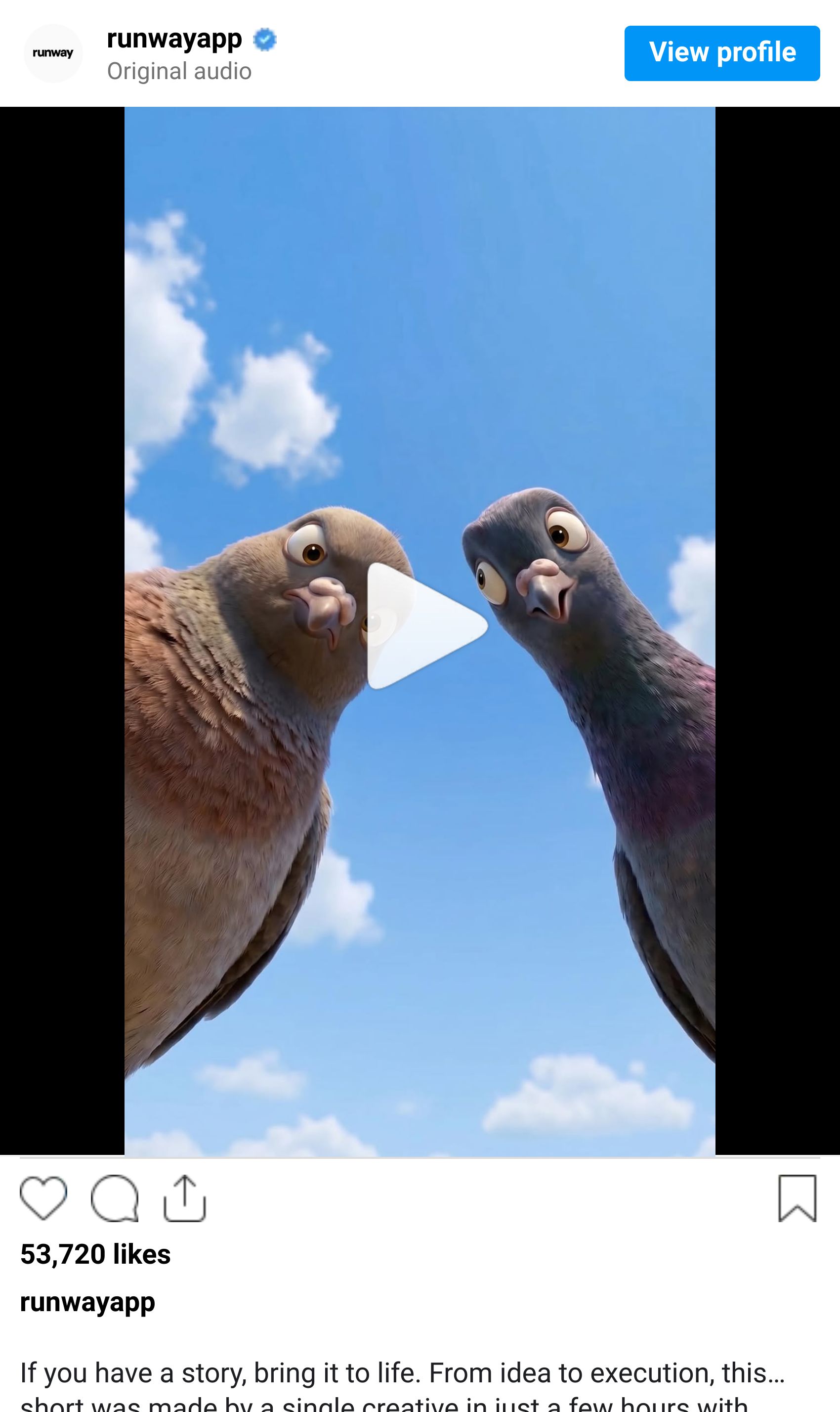
A technical artist working at Runway ML produced an animated short with genuinely impressive visual quality — the kind of animation that would have taken a small studio weeks. Made in a handful of generations over a few hours within the Runway app.
The point isn't just the speed of execution. It's that the quality ceiling for solo creators has jumped dramatically. If you have a story and some serious skill, the tools are no longer a bottleneck.
🔥 Bookmark these prompts to stay a step ahead
If you've been copying text straight from Claude and pasting it anywhere, people can probably tell. AI writing has patterns — overly structured, slightly formal, unnecessarily consistent — and detection tools are getting better at spotting them. Humans don’t sound like that. Not yet, anyway.
Here’a a compiled a prompt library specifically for this, and the titles alone tell you what each one targets. These are definitely worth bookmarking:
These are short, practical, and designed to be dropped into your workflow. Use them at the end of any AI-generated draft before it goes anywhere public.
💬 Quick poll: Do you have an AI prompt that’s become your go to? Tell us how it helped and we will feature it in the next issue.
Don't forget to rate today's post
Until next time,
Team @PracticalyAI
