👋 Hello hello,
Anthropic just accused rival labs of secretly copying Claude. Not inspired by. Not influenced by. Copied.
At the same time, Google quietly restricted access to OpenClaw for some of its own paying users.
And in a completely different corner of the world, Claude is now helping companies untangle 60-year-old COBOL systems that nobody wanted to touch.
Some of this is exciting. Some of it is uncomfortable. Let’s dig in.
🔥🔥🔥 Three Highly Curated AI Stories
OpenClaw is one of the fastest-growing AI agent frameworks right now. It lets AI run tasks across apps, tools, and workflows automatically.
But Google has reportedly started restricting some Pro and Ultra subscribers who were using OpenClaw heavily with Gemini.
This shows how powerful agent workflows are becoming.
Platforms are starting to control how their models are used. Because agents can generate massive amounts of automated activity very quickly.
Anthropic says other AI labs created over 24,000 fake accounts and ran more than 16 million conversations through Claude.
The goal wasn’t to use the product normally. It was to study it. Extract patterns. Recreate its behavior.
This process is called distillation. It’s how companies build smaller models based on bigger ones. But Anthropic says these attempts crossed the line and were done without permission.
What sticks with me is the scale. Sixteen million conversations is not experimentation. That’s extraction.
COBOL is older than most of the internet. Banks still run on it. Governments still rely on it.
The problem is that almost nobody wants to work with it anymore.
But Claude can now read COBOL systems and help translate them into modern code. It can determine what the old system is doing and help rebuild it in a newer version.
There are systems nobody touched for 30 years because changing them felt too risky. AI lowers that risk. A lot of hidden infrastructure may finally get rebuilt.
🔥🔥 Two Pro Tips Worth Knowing
1. 🎬 Wideframe
Wideframe is an AI agent designed for video production workflows.
If you’ve ever edited a video, you know how much of the work isn’t creative. It’s organizing clips. Managing files. Handling repetitive tasks.
Wideframe helps with that part. It acts more like an assistant than an editor. You still make creative decisions. It helps with the grind.
A guide shared lessons from someone who almost quit using OpenClaw before figuring it out:

The biggest insight was simple. Most failures weren’t caused by the framework. They were caused by the setup.
Using expensive models for simple tasks wastes money. Not saving the state makes agents forget. Trying to automate everything at once makes systems break.
Agents work best when you start small. Build one thing that works. Then expand.
🔥 Things You Didn’t Know You Could Do Using AI
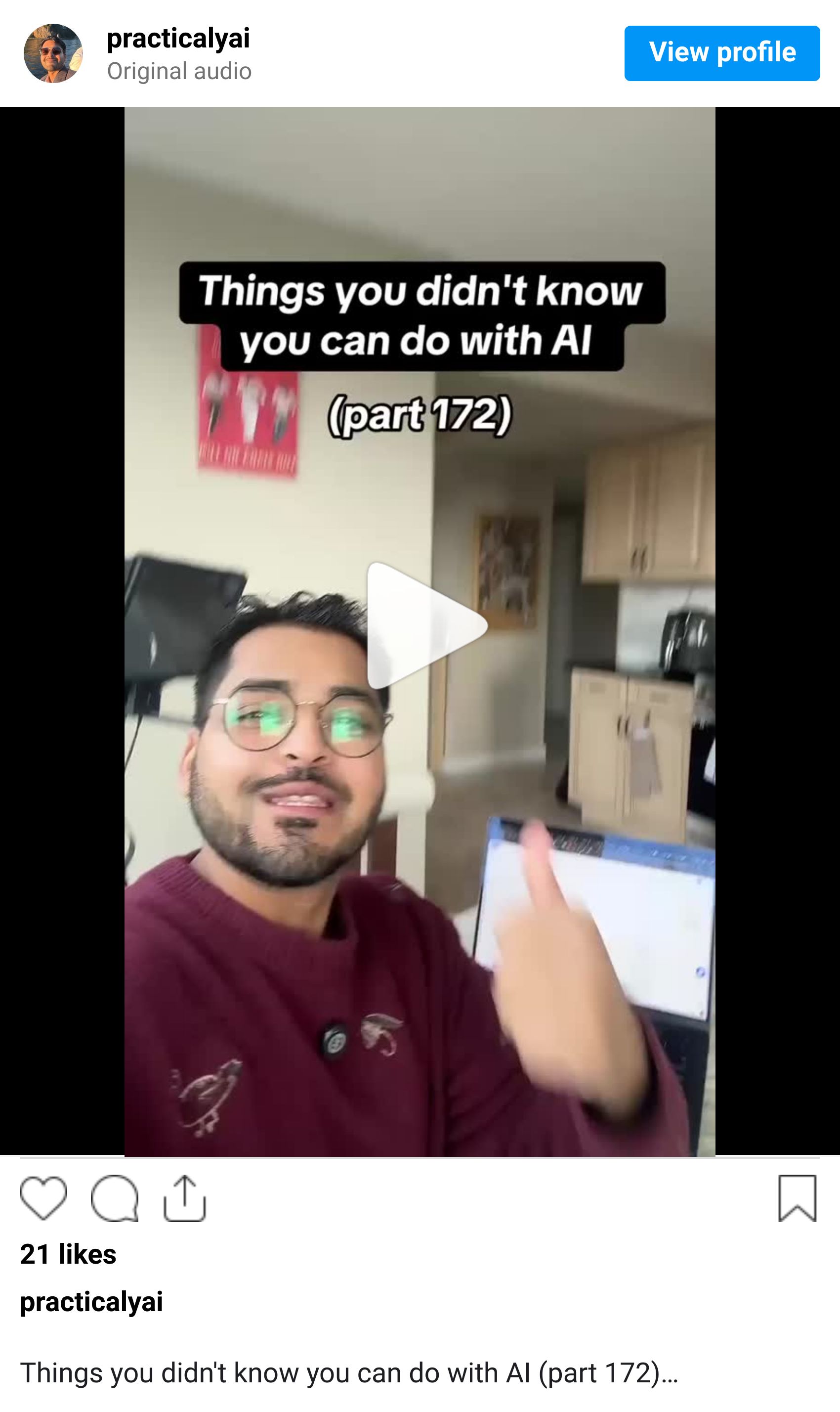
If you’ve ever spent hours turning notes into slides, this will save you serious time.
Gamma is a presentation tool that can turn your existing research into slides automatically. And now you can trigger it directly from your Cloud workspace.
Here’s how:
1. Open your Cloud workspace where your project lives
2. Go to Settings and open Connectors
3. Find and enable the Gamma connector
4. Prompt it with something like “Turn this into a presentation.”
5. It generates slides you can edit instantly
Your notes become a finished presentation in seconds.
Before you go, did today's newsletter help you stay ahead?
💬 5 sec poll: What’s one task you’d trust an AI agent to run for you today?
Until next time,
Kushank @PracticalyAI
